Choosing between metal vs. clear braces comes down to how you want your smile to look during treatment and the kind of correction your bite needs. Both options straighten teeth beautifully, but each has strengths worth knowing before you commit. At Kanning Orthodontics, we fit both styles to real-life needs, not the other way around.

What Are Metal and Clear Braces?
Metal and clear braces are both fixed appliances bonded to your teeth that use brackets and archwires to gently guide teeth into better positions. The main difference is appearance. Metal uses polished stainless steel brackets, while clear braces use tooth-colored ceramic brackets that blend in with your enamel.
Modern metal brackets are a far cry from the chunky versions you might remember from the ’90s. They’re smaller, smoother, and more comfortable against your cheeks. Many teens love adding colored elastic ties for personality.
Clear braces take a quieter approach. Ceramic brackets match your natural tooth shade, making them hard to spot in photos or across a conference table. At Kanning Orthodontics, we offer LightForce clear braces, which are custom 3D-printed to the exact contours of each tooth. That precision means better fit, better comfort, and often more efficient tooth movement.
Both options stay put throughout treatment, so there’s nothing to lose, forget, or take out before meals.
How Metal and Clear Braces Move Teeth
The mechanics behind both systems are nearly identical. Brackets act as tiny anchors bonded to each tooth. An archwire threads through the brackets and applies steady, gentle pressure that guides teeth toward their planned positions. Over time, that light force reshapes the bone around each root, allowing teeth to shift.
Elastic ligatures (the small colored or clear ties) hold the archwire in place against each bracket. Some systems use self-ligating clips instead, which skip the ties altogether. Both approaches work well, and Dr. Kanning will recommend the right setup for your case.
Here’s what the typical process looks like:
- Bonding appointment: Brackets are placed on each tooth and the archwire is threaded through.
- Adjustments every 6 to 8 weeks: We swap wires, tighten ties, or add components to keep progress moving.
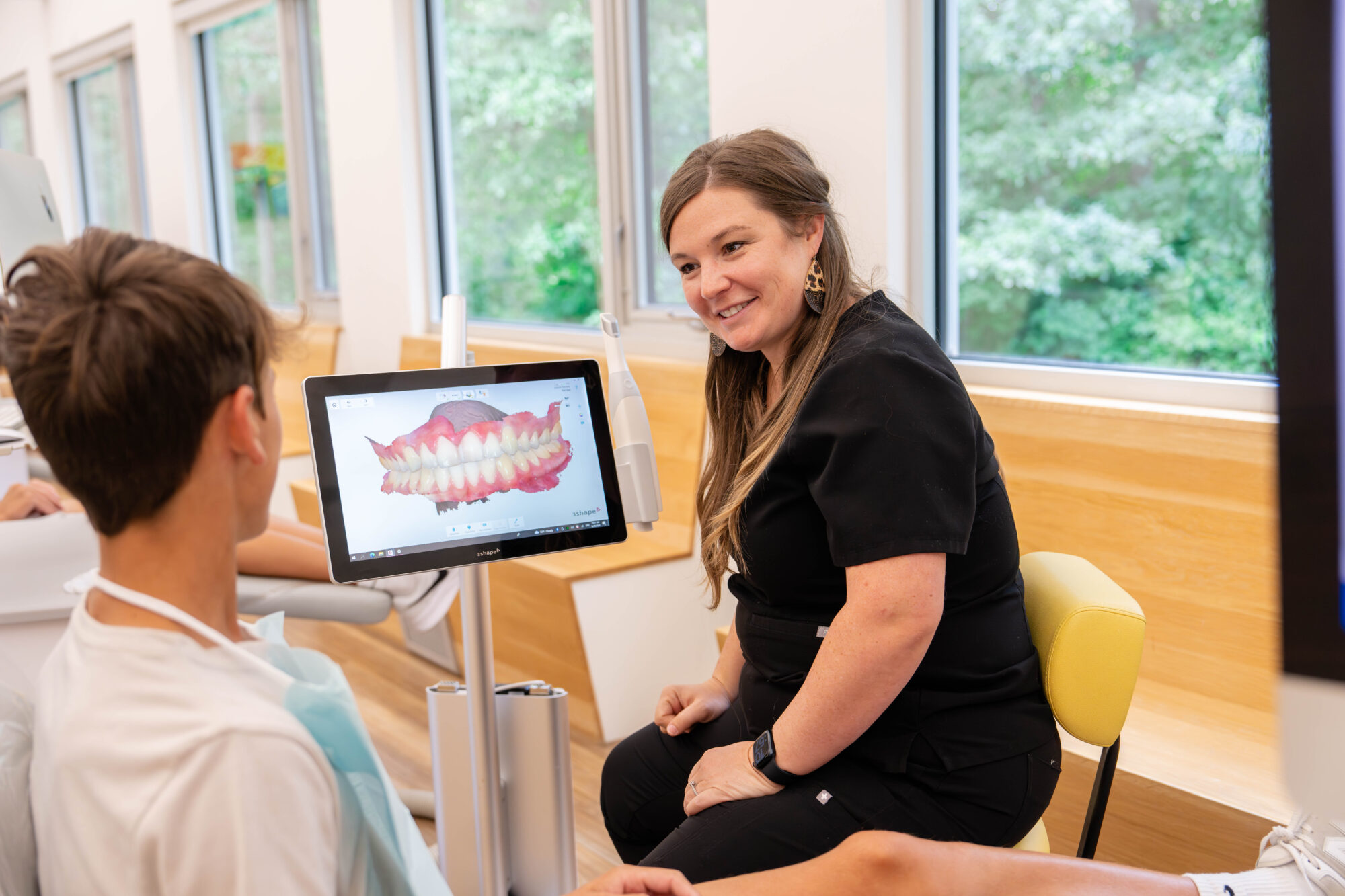
- Progress checks: Digital scans let us track movement precisely and adjust the plan as needed.
- Debond appointment: Brackets come off, and we fit you for retainers.
Treatment usually spans 12 to 24 months, depending on how much correction your bite needs. Both metal and clear braces handle the same range of issues: crowding, spacing, overbite, underbite, crossbite, and open bite. Clear braces often pair with clear or white ligatures to keep the whole system low-profile. Dr. Kanning and Dr. Sebastian bring decades of combined experience to every treatment plan, so you can feel confident the approach is tailored to your smile.
Pros and Cons of Each Option
Each type of braces has clear strengths. The best choice depends on your lifestyle and how visible you want your treatment to be.
Metal Braces: Pros
- Extremely durable, standing up well to sports, chewing, and daily wear
- A strong choice for complex cases involving significant rotation or bite correction
- Fun customization with colored elastic ties, which many teens enjoy
- Proven track record across generations of patients
Metal Braces: Cons
- Most visible of all bracket options
- Silver color stands out in photos and video calls
- Less appealing for adults in client-facing careers
Clear Braces: Pros
- Discreet appearance that blends with your natural tooth color
- Ideal for adults, professionals, and image-conscious teens
- Great for weddings, graduations, and other photo-heavy seasons of life
- LightForce clear braces are custom 3D-printed for a precise fit
- Treat the same range of bite issues as metal
Clear Braces: Cons
- Brackets are slightly larger than metal versions
- Ligatures can stain from coffee, tea, curry, or red wine between appointments
- May require slightly more careful cleaning around each bracket
Lifestyle matters more than most people realize. If you play contact sports, work in food service, or sing in a choir, we’ll talk through how each option fits your daily routine. Both metal and clear braces effectively correct crowding, spacing, overbite, underbite, and crossbite, so the choice really comes down to appearance and comfort preference.

Metal vs. Clear Braces: Side-by-Side Comparison
Here’s a quick snapshot comparing the two options across the features patients ask about most. Use this as a starting point, then bring your questions to your complimentary consultation.
| Feature | Metal Braces | Clear Braces |
|---|---|---|
| Visibility | Highly visible silver brackets | Blend with natural enamel |
| Durability | Highest, very resistant to breakage | Strong, but slightly more fragile |
| Treatment time | 12-24 months (slight edge in complex cases) | 12-24 months |
| Staining risk | Brackets don’t stain; ligatures can | Brackets resist stains; ligatures can discolor |
| Comfort | Mild soreness after adjustments | Mild soreness after adjustments |
| Best for | Teens, athletes, complex cases | Adults, professionals, image-conscious patients |
| Customization | Colored ties available | Clear or white ties for discretion |
A few things worth noting from the table. Ceramic brackets themselves don’t stain, but the elastic ties around them can pick up color from foods like coffee, curry, and red wine. The good news? Ligatures get swapped out at every adjustment appointment, so any staining is temporary.
Both types cause mild soreness for a day or two after adjustments. Over-the-counter options and soft foods usually handle it just fine.
Who Is a Good Candidate for Each Type?
Both options work for most patients, but certain lifestyles and smile goals lean one direction more than the other. Here’s how it usually breaks down:
Metal braces tend to be a strong match for:
- Teens who like customizing with colored ties
- Athletes in contact sports
- Patients with complex bite corrections
- Younger patients who aren’t bothered by visible brackets
Clear braces tend to be a strong match for:
- Adults in client-facing careers
- Professionals who present on camera or in meetings
- Image-conscious teens
- Patients with mild to moderate correction needs
- Anyone with a big event (wedding, graduation) during treatment
Some patients choose a hybrid approach: clear braces on the upper teeth (which show most when you smile) and metal on the lower teeth (which are rarely visible). This still gives you a discreet look up front.
If you have a nickel allergy, let us know. We’ll discuss bracket material options that keep your treatment comfortable and safe.
The best way to know which option fits? A quick evaluation with Dr. Kanning or Dr. Sebastian. Both bring decades of combined experience to every case, and your complimentary consultation at Kanning Orthodontics is the easiest first step.

Frequently Asked Questions
Are clear braces as effective as metal braces?
Yes. Clear braces treat the same range of bite and alignment issues as metal, including crowding, spacing, overbite, underbite, and crossbite. The underlying mechanics are identical, with brackets and archwires applying gentle pressure to move teeth. For most patients, the choice between the two is about appearance and lifestyle, not effectiveness.
Do clear braces take longer than metal?
For most cases, treatment times are comparable, usually 12 to 24 months. Metal may have a slight edge in highly complex cases involving significant rotation or major bite correction, but the difference is often small. Your orthodontist will give you a realistic timeline based on your specific smile goals.
Do ceramic braces stain?
The ceramic brackets themselves resist staining and keep their tooth-colored appearance throughout treatment. However, the small elastic ligatures that hold the archwire in place can discolor from foods like coffee, curry, tea, and red wine. Ligatures are replaced at every adjustment appointment (every 6 to 8 weeks), so any discoloration is temporary.
Which hurts more, metal or clear braces?
Neither option is dramatically more uncomfortable than the other. Both can cause mild soreness for a day or two after bonding and after each adjustment, as teeth begin to shift. Over-the-counter remedies, soft foods, and orthodontic wax (if any bracket rubs) usually handle it well.
How do clear braces compare to clear aligners?
Clear braces are fixed to your teeth throughout treatment, while clear aligners are removable trays you swap out every one to two weeks. Clear braces work well for a wider range of complex cases and don’t require you to remember to wear them. Clear aligners offer more flexibility for eating and cleaning. Both are great options, and your orthodontist can help you compare based on your bite and lifestyle.
Can adults get metal braces?
Absolutely. Adults make up a growing portion of orthodontic patients, and metal braces are a smart, dependable choice for anyone who wants effective treatment. Today’s metal brackets are smaller and smoother than older versions. Many adults also opt for clear braces or clear aligners for a more discreet look, but there’s no age limit on any option.
Ready to see which option fits your smile best? Schedule your complimentary consultation at Kanning Orthodontics. Dr. Kanning and Dr. Sebastian will walk you through your choices at our Kansas City office (9101 NE 82nd Terrace), with no pressure and plenty of time for your questions. Let’s get your smile across the finish line together.